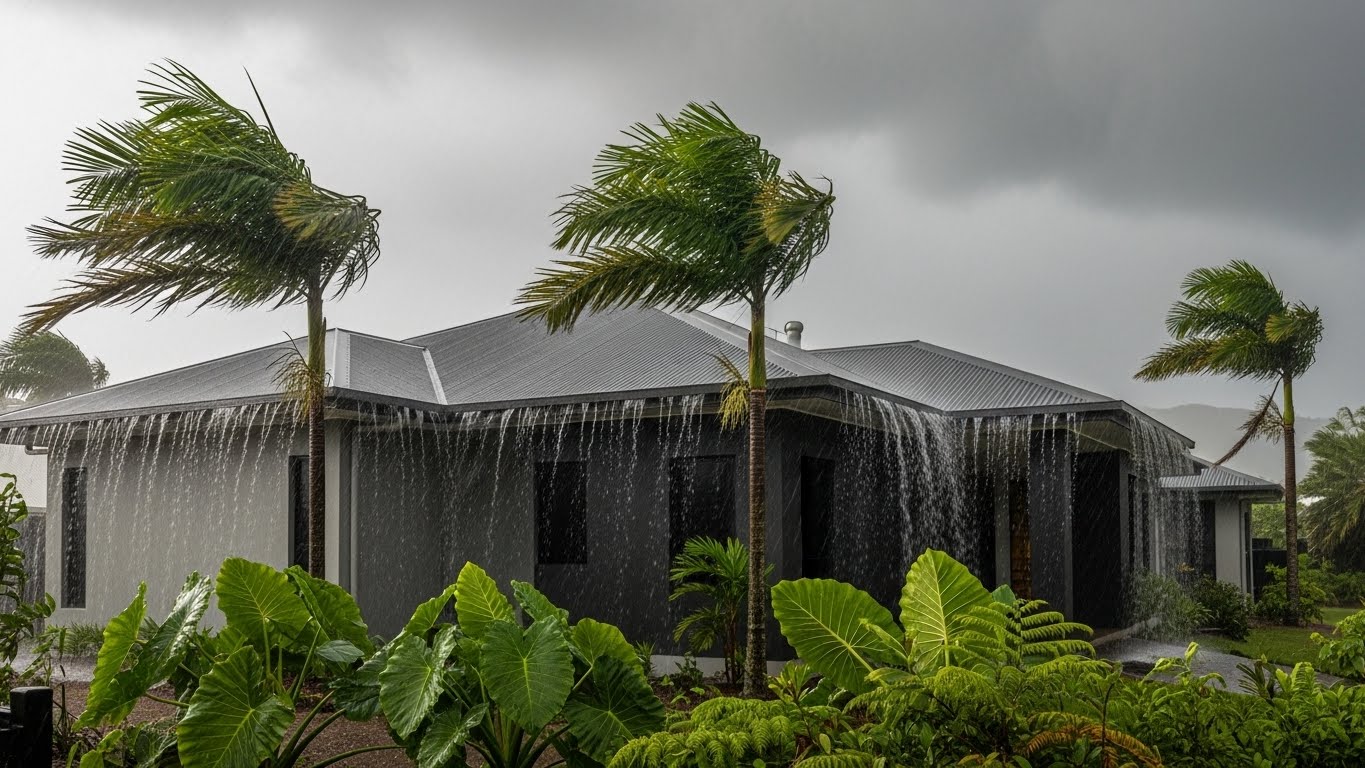
Cairns property owners face unique roofing challenges that stem directly from the region’s tropical monsoon climate. Understanding how intense rainfall, high humidity, cyclonic winds, and relentless UV radiation impact roofing systems helps protect your investment and prevent costly water damage. With average annual rainfall exceeding 2000mm and humidity levels reaching 78 percent during wet months, RF Leaking Roof Cairns sees firsthand how Cairns’ climate creates perfect conditions for roof leaks. This comprehensive guide explains the specific climate factors that compromise roofing integrity and provides practical knowledge to help you maintain a watertight home throughout the year.
Understanding Cairns’ Tropical Monsoon Climate
Cairns experiences a distinct tropical monsoon climate characterised by two dramatically different seasons that place ongoing stress on roofing materials and systems. The wet season, running from November through April, brings intense monsoonal activity with daily maximum temperatures averaging 31.5°C in January combined with humidity levels that regularly exceed 75 percent at 9am. During this period, Cairns receives the bulk of its annual rainfall, with January typically recording 402.8mm and February seeing 437.5mm according to Australian Bureau of Meteorology climate data. The dry season, spanning May to October, offers respite with lower rainfall totals, reduced humidity, and cooler nighttime temperatures dropping to around 17 to 18°C. However, this seasonal shift creates expansion and contraction cycles in roofing materials. The cyclone season, most active between January and March, introduces the additional threat of destructive winds exceeding 200 kilometres per hour that can uplift roofing sheets, displace tiles, and damage critical flashing components. Year-round, Cairns experiences intense UV radiation due to its tropical latitude, which accelerates the degradation of sealants, protective coatings, and roofing materials themselves. These combined climate factors mean that roofs in the Cairns region endure far more environmental stress than those in temperate Australian climates, resulting in shorter effective lifespans and increased vulnerability to leak development.
How Heavy Rainfall Damages Roofing Systems
The extraordinary rainfall volumes experienced during Cairns’ wet season create multiple pathways for water penetration in roofing systems that may otherwise remain intact in drier climates. When monthly rainfall reaches 400mm or more concentrated into just 15 to 16 rainy days, the sheer volume of water overwhelms inadequate drainage systems and exploits even minor weaknesses in roof construction. Heavy downpours saturate roofing materials including tiles, sheets, and underlayment membranes, with prolonged wetness degrading adhesives, swelling timber components, and promoting rust in metal fasteners. Roof valleys, designed to channel water away from the structure, become high-pressure waterways during intense rainfall events, and any deterioration in valley flashing or accumulation of debris creates pooling that backs water under roof edges. The velocity of water running across roof surfaces during tropical storms dislodges loose granules from tiles, erodes sealant beds around penetrations, and forces water through microscopic gaps that would otherwise pose no threat. Professional roof leak detection services become essential when these cumulative effects create entry points for moisture. Gutter systems face particular strain during Cairns’ wet season, as blocked or undersized gutters cause water to back up under roof edges and penetrate through eaves and soffits. The repetitive wetting and drying cycles throughout the five-month wet season progressively weaken sealed joints, compromised flashing, and aging roofing sheets until catastrophic failure occurs during the next heavy downpour.
The Impact of High Humidity on Roof Components
Cairns’ persistently high humidity levels, averaging 75 percent in the morning and 66 percent in the afternoon during wet months, create insidious moisture problems within roof cavities and structural components that often go undetected until significant damage occurs. Unlike rainfall that provides obvious external water sources, ambient humidity allows moisture to condense on cool surfaces within roof spaces, particularly during the transition between hot days and cooler nights. This condensation saturates insulation materials, reducing their thermal performance and creating ideal conditions for mould and mildew growth that can spread throughout ceiling cavities. Metal roofing components including screws, battens, brackets, and tie-down straps experience accelerated corrosion in the humid tropical environment, with rust compromising the structural integrity of connections that keep roofs secured during cyclonic winds. Timber roof framing absorbs moisture from humid air, leading to dimensional changes, warping, and eventually rot in inadequately ventilated roof spaces. The constant moisture presence creates perfect conditions for fungal decay in timber rafters, trusses, and battens, weakening load-bearing capacity over time. Sealants and adhesives used around roof penetrations, flashings, and sheet overlaps lose their flexibility and adhesion when subjected to continuous high humidity combined with heat cycling. When property owners discover water stains on ceilings or musty odours emanating from roof spaces, humidity-related deterioration has typically been progressing for months or years. Proper roof ventilation systems help mitigate humidity damage, but Cairns homeowners must remain vigilant for early warning signs that moisture is compromising their roof structure from within.
Cyclonic Winds and Storm Damage in Cairns
Queensland’s Far North coast, including the Cairns region, falls within Wind Region C under Australian building codes for cyclonic areas, requiring homes to withstand wind gusts of up to 250 kilometres per hour. Cyclonic winds generate enormous uplift forces on roof surfaces, with suction on the leeward side and ridge areas creating pressures that can exceed the holding capacity of inadequately fastened roofing materials. During severe tropical cyclones, these wind forces literally peel roofing sheets from battens, lift entire sections of tile roofs, and tear flashing away from penetrations and roof edges. The progressive failure pattern typically begins at vulnerable points such as roof corners, eaves, and ridges where wind pressures concentrate, then cascades as each successive failure exposes more of the roof structure to destructive forces. Roofing screws that have corroded in the humid tropical environment lose their holding power, allowing sheets to work loose even under moderate wind loads well below design wind speeds. Wind-driven debris, ranging from palm fronds and tree branches to displaced roofing materials from neighbouring properties, becomes airborne projectiles that puncture roofing sheets, crack tiles, and damage flashing systems. The combination of high winds and driving rain forces water horizontally into areas normally protected from vertical rainfall, penetrating through weep holes, under flashings, and through ventilation systems. Following cyclonic events, emergency roof leak repairs address immediate damage while comprehensive structural assessments identify hidden compromises to roof tie-downs, batten connections, and truss anchorage that could fail in subsequent storms if left unaddressed.
UV Radiation and Material Degradation
The tropical latitude of Cairns, situated approximately 17 degrees below the equator, exposes roofs to intense ultraviolet radiation throughout the year that accelerates the breakdown of roofing materials and protective systems. Metal roofing’s protective coating systems, including both factory-applied finishes and aftermarket treatments, gradually lose their effectiveness through a process called chalking, where UV exposure breaks down the polymer chains in paint systems and exposes bare metal to corrosive elements. Roof sealants used around penetrations, at sheet overlaps, and along ridges undergo photochemical degradation, becoming brittle and cracked as UV radiation destroys the polymer bonds that provide flexibility and water resistance. Tile coatings and surface treatments applied to provide additional waterproofing or aesthetic enhancement fade and break down under constant solar bombardment, leaving the underlying tile material vulnerable to water absorption and freeze-thaw damage, although freezing rarely occurs in Cairns. Rubber or synthetic membrane systems installed as underlayment or waterproofing layers experience brittleness, cracking, and reduced elasticity as UV exposure penetrates through any gaps in the primary roofing material above. The cumulative effect of years of UV exposure means that roofing materials in Cairns typically reach the end of their effective service life significantly sooner than the same products would in temperate regions with lower solar radiation levels. According to research on roofing material performance in Australian conditions, thermal performance and UV resistance have become critical factors in material selection for tropical climates. Regular inspection and timely replacement of degraded sealants, coatings, and protective systems extends roof lifespan and prevents the water penetration that occurs when UV damage compromises waterproofing integrity.
Temperature Fluctuations and Thermal Expansion
While Cairns enjoys relatively stable year-round temperatures compared to southern Australian regions, the daily temperature variations between scorching daytime highs and cooler nights create continuous thermal cycling that stresses roofing materials and connections. Metal roofing sheets expand and contract with temperature changes, with a standard Colorbond sheet potentially changing length by several millimetres between a 40°C afternoon and a 22°C early morning. These expansion and contraction movements occur thousands of times annually, gradually working roofing screws loose, enlarging fastener holes, and creating gaps at sheet overlaps where water can penetrate. Thermal movement at different rates between dissimilar materials, such as metal flashings attached to concrete or timber substrates, creates shearing forces that break adhesive bonds and open gaps around critical waterproofing transitions. Ridge capping and barge flashings experience particularly severe thermal stress as they’re fully exposed to solar heating yet must maintain watertight seals to the primary roofing material beneath. The differential expansion between roof surfaces and supporting battens or trusses can cause fasteners to work loose or structural connections to distort, compromising the roof’s ability to resist wind uplift during cyclonic events. Sealant joints that remain flexible in moderate climates become hard and brittle when subjected to Cairns’ combination of high temperatures, UV exposure, and thermal cycling, eventually cracking and allowing water penetration. Building materials specified for Cairns roofing applications must account for the local temperature ranges and thermal movement characteristics to prevent premature failure. Property owners should consider professional roof maintenance services that include inspection and replacement of thermally degraded components before they progress to active leak points.
Common Leak Points Caused by Tropical Weather
Cairns’ unique climate creates predictable patterns of roof failure and water entry that experienced roofing professionals recognise as direct consequences of tropical environmental stresses. Roof valleys concentrate water flow from large catchment areas and become primary leak locations when flashing deteriorates, debris accumulates, or sealant fails under the constant exposure to flowing water during wet season downpours. Penetration points including plumbing vents, exhaust fans, air conditioning condensate drains, satellite dish mounts, and solar panel attachments represent engineered weaknesses in the roof membrane where multiple materials meet and proper sealing becomes critical to prevent water entry. Flashing systems around chimneys, skylights, and where the roof meets vertical walls experience accelerated failure in the Cairns climate as thermal movement between materials, UV degradation of sealants, and wind-driven rain combine to compromise waterproofing integrity. Ridge capping sits at the highest point of the roof where wind speeds peak during storms, and any loosening of fasteners or deterioration of sealing systems allows water to be driven horizontally into the roof cavity. Gutter overflow points, particularly at valley discharge locations and downpipe connections, cause water to back up under roof edges when blockages occur or when rainfall intensity exceeds the gutter’s carrying capacity. The junction between the main roof and lower-level additions, verandahs, or carports creates complex flashing transitions that are difficult to waterproof correctly and vulnerable to failure under the combined stresses of thermal movement, UV exposure, and debris accumulation. Skylights installed to provide natural lighting become leak sources when seals deteriorate, condensation drainage systems fail, or impact damage cracks the glazing material. Professional roof waterproofing services address these vulnerable areas with climate-appropriate materials and installation techniques designed to withstand tropical conditions.
Preventing Climate-Related Roof Leaks in Cairns
Proactive maintenance and timely repairs tailored to Cairns’ tropical climate provide the most cost-effective approach to preventing the serious water damage that results from roof leaks. Regular professional inspections, ideally conducted twice annually before and after the wet season, identify developing problems including corroded fasteners, deteriorating sealants, damaged flashing, and compromised roofing materials while they remain minor issues that can be addressed before failure occurs. Gutter cleaning before November ensures that drainage systems can handle the intense wet season rainfall without overflow that damages fascias, soffits, and roof edges while allowing water to back up under roofing materials. Vegetation management including trimming overhanging branches reduces the accumulation of organic debris in valleys and gutters while eliminating the risk of major limb damage during cyclonic winds. Application of appropriate sealants and coatings designed specifically for tropical conditions extends the service life of roofing materials and protection systems by providing UV resistance, flexibility through thermal cycles, and adhesion that withstands high humidity. Proper ventilation systems within roof cavities reduce humidity buildup that promotes corrosion, mould growth, and timber decay while helping to moderate the extreme temperatures that accelerate material degradation. Material selection for repair and replacement projects should prioritise products rated for Wind Region C cyclonic conditions, manufactured with corrosion-resistant fasteners and components, and proven to perform in high UV tropical environments. Property owners should establish a relationship with experienced local roofing professionals who understand Cairns’ specific climate challenges and can provide guidance on appropriate maintenance intervals, material selections, and upgrade opportunities that increase roof resilience. Documentation of maintenance activities, inspection findings, and repairs creates a valuable record that supports insurance claims following storm events and helps new property owners understand the roof’s service history when properties change hands.
Frequently Asked Questions
How often should I inspect my roof in Cairns’ tropical climate?
Professional roof inspections should be conducted at least twice annually in Cairns to address the accelerated wear caused by tropical conditions. The ideal schedule includes one inspection in late October or early November before the wet season begins, allowing you to address any vulnerabilities before months of heavy rainfall and potential cyclonic activity. A second inspection in April or May after the wet season concludes identifies damage that occurred during the high-risk period and allows for repairs during the more favourable dry season weather. Properties with older roofs, previous leak history, or nearby overhanging vegetation benefit from quarterly inspections to catch developing problems early. Following any significant weather event including tropical cyclones, severe thunderstorms, or unusually intense rainfall, an immediate inspection helps identify damage before minor issues progress to serious leaks.
What roofing materials perform best in Cairns’ wet season?
Metal roofing systems, particularly Colorbond steel rated for cyclonic conditions, demonstrate superior performance in Cairns’ wet season due to their resistance to water absorption, ability to shed heavy rainfall quickly, and structural strength to resist wind uplift. Concrete or terracotta tiles perform adequately when properly installed with appropriate underlayment and when all tiles are securely fastened with cyclone-rated clips rather than relying on gravity alone. The key to wet season performance lies not just in the primary roofing material but in the complete system including properly detailed flashings, adequate roof pitch to promote drainage, quality underlayment materials, and correctly sized gutter systems. Materials should be selected based on Wind Region C requirements, corrosion resistance appropriate for coastal tropical environments, and proven performance records in similar climates throughout Queensland’s Far North.
Can high humidity alone cause roof leaks?
While high humidity typically does not directly cause active leaks in the sense of water dripping from the ceiling, it creates the conditions that lead to structural failures which then allow water penetration during rainfall events. Persistent humidity causes metal fasteners, brackets, and tie-downs to corrode, weakening their holding capacity and allowing roofing materials to work loose under wind loads or thermal movement. Condensation from humidity saturates timber roof framing, promoting rot that reduces structural capacity and allows roofing materials to sag or fail. Humidity keeps sealants and adhesives in a constantly moist state that accelerates chemical breakdown and reduces their ability to maintain watertight seals around penetrations and at material transitions. The combination of high humidity and elevated temperatures creates the perfect environment for mould and mildew growth that, while not causing leaks directly, indicates excessive moisture in the roof cavity that should be addressed through improved ventilation.
When is the best time to repair roof leaks in Cairns?
The dry season months from May through October provide the most favourable conditions for roof repairs in Cairns, with lower rainfall frequency, reduced humidity, and more predictable weather patterns allowing work to proceed without interruption. Repairs conducted during this period ensure that sealants and adhesives can cure properly without moisture contamination, paint and coating systems can dry completely, and workers can safely access roof areas without the hazards of wet, slippery surfaces. However, urgent repairs such as addressing active leaks or securing loose roofing materials following storm damage cannot wait for ideal weather conditions. Emergency repairs may require temporary waterproofing measures during wet conditions followed by permanent repairs during the dry season. Planning non-urgent roof work for dry season scheduling helps avoid the higher costs and extended timelines associated with working during the challenging wet season months when demand for roofing services also peaks following storm events.
Does Cairns’ climate shorten roof lifespan?
Cairns’ tropical climate significantly reduces the effective service life of most roofing materials compared to the same products installed in temperate regions of Australia. The combination of intense UV radiation, high humidity, thermal cycling, heavy rainfall, and cyclonic wind exposure creates far more aggressive aging conditions than manufacturers’ standard lifespan estimates typically account for. Metal roofing that might last 40 to 50 years in southern regions often requires replacement or major refurbishment after 25 to 30 years in Cairns due to coating breakdown, corrosion, and fastener failure. Tile roofs experience accelerated deterioration of surface treatments, while the constant thermal cycling can cause cracking that allows water penetration and subsequent structural damage. Sealants, flashings, and penetration waterproofing systems may need replacement every 7 to 10 years rather than the 15 to 20 years typical in moderate climates. Property owners can maximise roof lifespan through consistent maintenance, prompt repairs of minor issues, use of climate-appropriate materials, and professional installation that follows manufacturer specifications for cyclonic regions.
Conclusion
Understanding how Cairns’ tropical monsoon climate impacts your roof provides the foundation for effective leak prevention and property protection. The combination of torrential wet season rainfall, persistent high humidity, cyclonic winds, intense UV radiation, and daily thermal cycling creates uniquely challenging conditions for roofing systems. Regular professional inspections, proactive maintenance, climate-appropriate material selection, and timely repairs represent the most effective strategy for maintaining roof integrity in this demanding environment. For expert assessment and professional leaking roof services in Cairns, contact RF Leaking Roof Cairns on 046 805 2978.
More Services
For more information about leaking roof services at RF Leaking Roof Cairns, check them out below: